
Generative Agility and the Studio Method
The Evolution of Enterprise Agility in the Generative Age

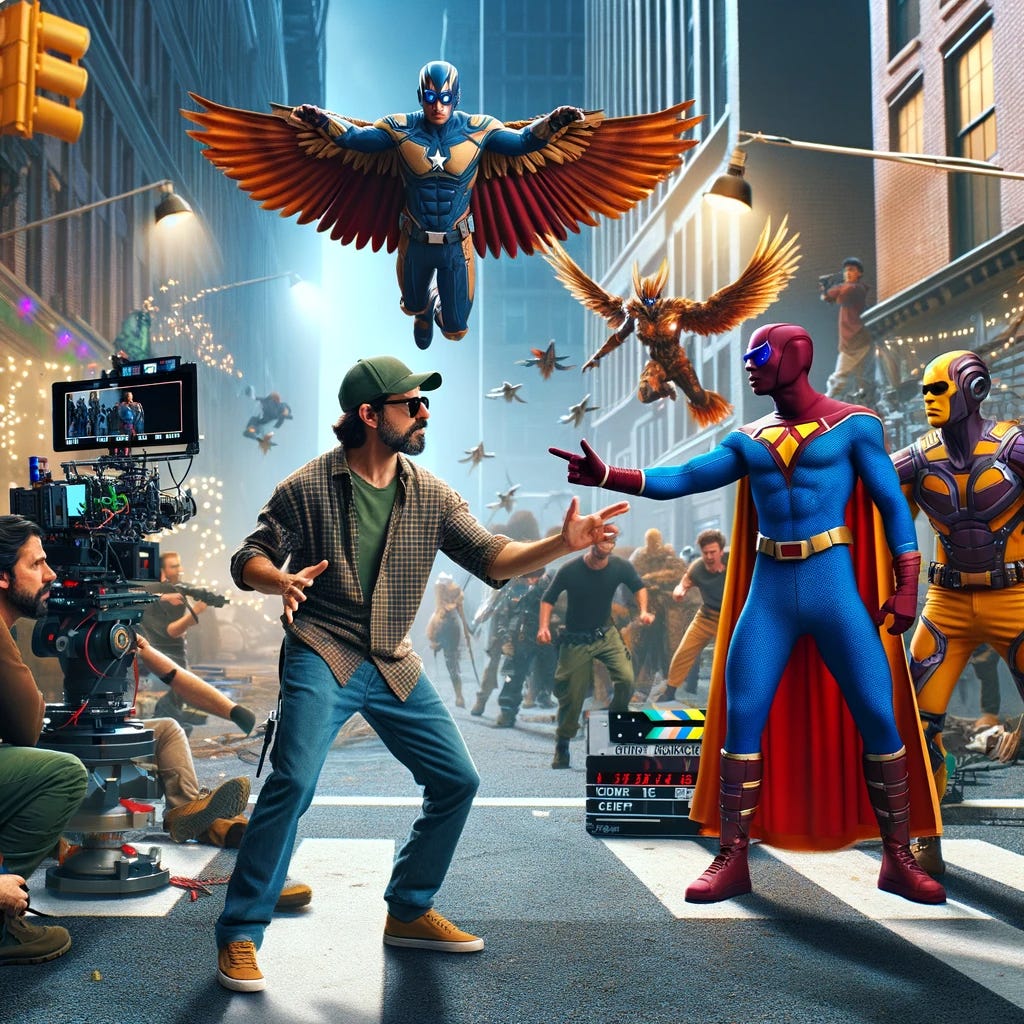
There is no question that artificial intelligence, whether via ChatGPT, code copilots, media generation, or other means, profoundly impacts Agile and business process management. As Generative AI, in particular, makes its way into project workflows, likely, these changes will only become more prominent over time.
The Virtualization of Teams
GenerativeAI, by its very definition, creates things. This one aspect is worth considering for its implications. Until comparatively recently, AI’s primarily role was categorical or search in nature: it could classify a string of text or color value, and from that could provide suggestions, but ultimately, it was the human agent that was responsible for enacting those suggestions.
Starting a few years ago (starting around 2017 or so), that contract began to change. The attention of the machine became longer. This is a subtle but important concept. Attention can be thought of as the amount of time and effort that a given agent can bring to a task, often measured by how far forward and backwards the algorithm needs to make that suggestion. A spell check program has a limited attention span, usually a sentence or so. A grammar checker’s attention, on the other hand, needs to reach out farther, often up to the whole document. This can also be thought of as the context of that document.

How does the grammar checker know what suggestion to make? It looks at a model consisting of many documents in a corpus of documents and asks the question - when you have this particular pattern of words, what are the likely patterns of response, assuming that you have blank templates to use for that pattern matching. The more processing speed you can throw on that, especially if you can in effect compress those patterns, the bigger the set of potential alternatives exist. Eventually, you are able to create whole documents based upon these prompts, and you slip stealthily into a far more generative mode.
The other thing underlying all of this is that the infrastructure for all of this is also getting much, much faster. GPUs started out as math coprocessor to do the fiddly bits of throwing up a user interface on a screen so the CPU could be engaged with more orchestration work. However, it turns out that most of the really interesting things that one can do with computers ultimately comes down to mathematical operations on streams of tokens (a kind of generalized concept for words). As such, the CPU has dwindled in importance even as the GPU has beefed up like a body builder on steroids.
This in turn has meant that computing is now going through a phase transition, as compute power (processing + memory + bandwidth) has reached a critical tipping point. The context has broadened to become (and in some respects to exceed) the context of the Internet, and all that compute power is now easily available for a low monthly fee to everyone.
In 1975, creating a slide deck presentation was an arduous, expensive operation, involving copywriters, designers, graphic artists, photographers, and film developers, and usually requiring a month or more of prep time. There was a reason that such presentations were primarily the domain of large corporations, usually at the board of directors level. In 2025, it takes about an hour, mostly for figuring out the message you want to get across, and if you’re willing to forego much of the intellectual decision making, could take you as a single person less than a minute. That means that in that month, a single person could readily do 50,000 such slide presentations today compared to 1975.
This compression continues to hold today, and this is one of the reasons that the Agile movement is facing a crisis right now. Agile is, stripped of its bells and whistles, a methodology for coordinating the efforts of a team. What happens when that team disappears, when all of the separate functions that used to be the province of several specialists can now be accomplished by a single individual acting primarily in the role of orchestrator?

Once you virtualize the team, Agile, in its current form, simply becomes another set of rules that can be encoded into a pipeline. Put more starkly: unless it dramatically changes as a discipline, Agile is dead.
The argument can be made that the products of the future - think animated, interactive videos - will similarly require human orchestration, but again, this kind of integration is easy enough to perform with existing technology and minimal human intervention. Indeed, it can be argued that the primary purpose of software teams was to assist in integration of modular components that could not yet be put under the aegis of a coordinating piece of software.
What has changed today is that the overall time for deployment has dropped so dramatically that there is more room for the client to interact agilely with the producer, but even there, this client to producer dynamic is straightforward enough that a formal methodology is not really necessary.
Characteristics of Generative AI
This process will lead to specialization, but its a specialization based upon stylistic rather than functional terms. You can see that with the emergence of Loras, which are filters that can shape what gets generated by restricting the potential set of possibilities and how they get interpreted (transformed). Models determine the base set of documents,videos,sounds,etc., the loras can be used across models to augment and shape the results from prompts, and the loras and similar embeddings can also be configured (strengthened or weakened) to change their respective impact. You can see this mostly strongly with image applications such as stable diffusion, but the architecture is becoming commonplace throughout the Gen AI sphere.
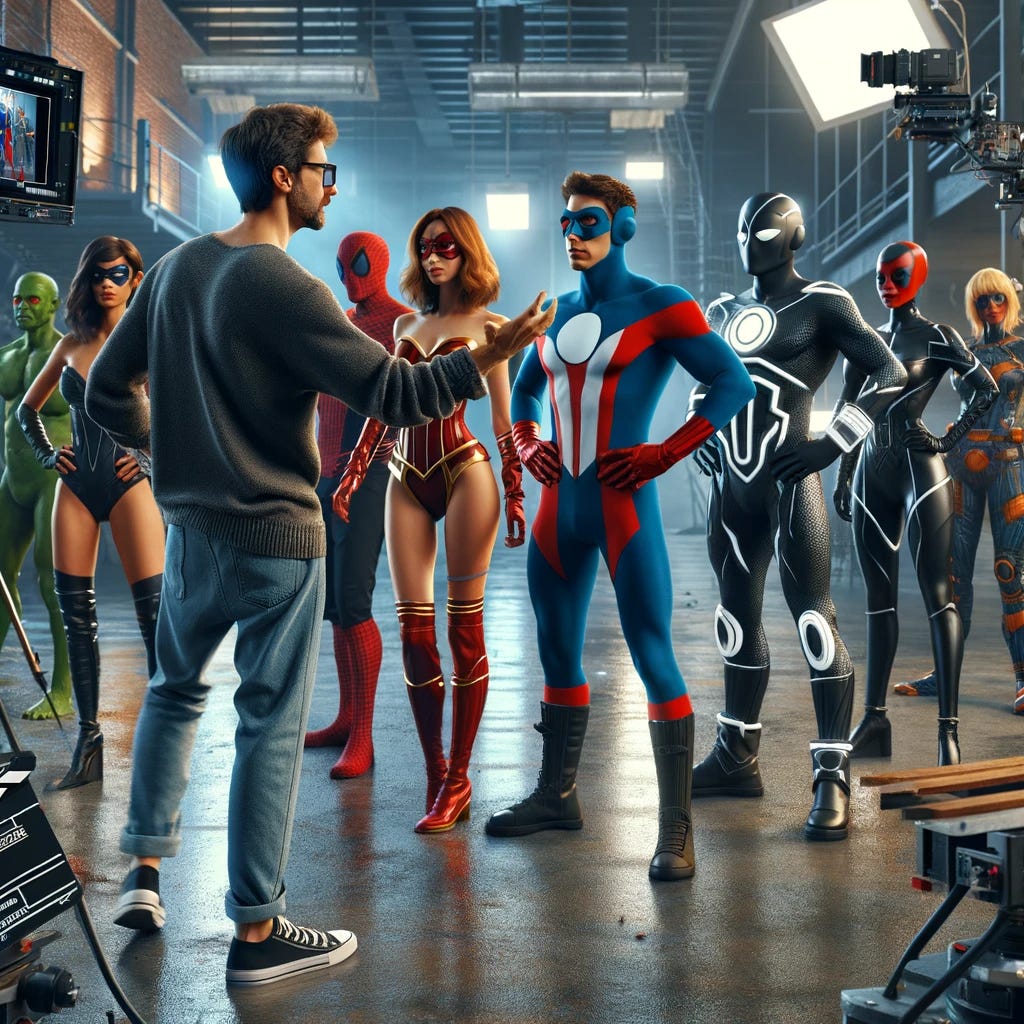
This new Generative AI “team”, then is simultaneously compact and diffuse: the client, the producer, the show runner (typically a writer or design specialist,may also be the producer), the model builder, the lora engineer, the prompt specialist, and an editor or QA specialist. Much of this team can be outsourced or purchased as software packages, and of course in many cases it will collapse down to a single person. In the case of more complex products (such as a game or movie), you may also need a media coordinator, which is actually a role that the agile specialist as project manager is surprisingly well suited to fulfill.
This hints at what Generative Agility looks like, and not surprisingly, it bears more than a passing resemblance to contemporary media/game studios (one reason I’ve referred to this as the Studio Method in the past). The characteristics of such agility are different than they were twenty years ago:
The Storyteller Mindset. Finally, expect projects, even technical projects, to become more narrative in nature. Everything becomes a story, and projects will either be seeds or will be a part of a narrative at some point. Narratives are powerful tools for managing continuity and interoperability, because they provide an incentive to take on the expense of harmonization.
All Companies are Publishers. All companies are becoming publishers, as digital twins, generative design, AI mediated orchestration, and 3D production converge on a publishing-oriented workflow.
Parallelization of Products. Multiple completed projects (such as scenes from a movie from different locations) will increasingly be completed in parallel by skilled producers.
Live = Agile. “Live” components - those things that required human participants, such as a live video shoot - would be more traditionally Agile in nature.
Many Takes Possible. Automation of significant components would mean that a typical producer can (and almost certainly will) produce a large number of variations up front that can then be selected from (or even cannabalized) to fill in bad takes or change in editorial direction.
Asynchronous and Agent Oriented. Many operations will be handled by agents in a network working asynchronously, some human, some bot, many both in collaboration. This means that the team at any given point could swell from one or a handful of people to potentially thousands, and their products consequently will range from mission critical to supplemental (they increase “texture”) but not necessary. The vast majority of all workers by 2050 will work as agents in (potentially multiple) projects simultaneously.
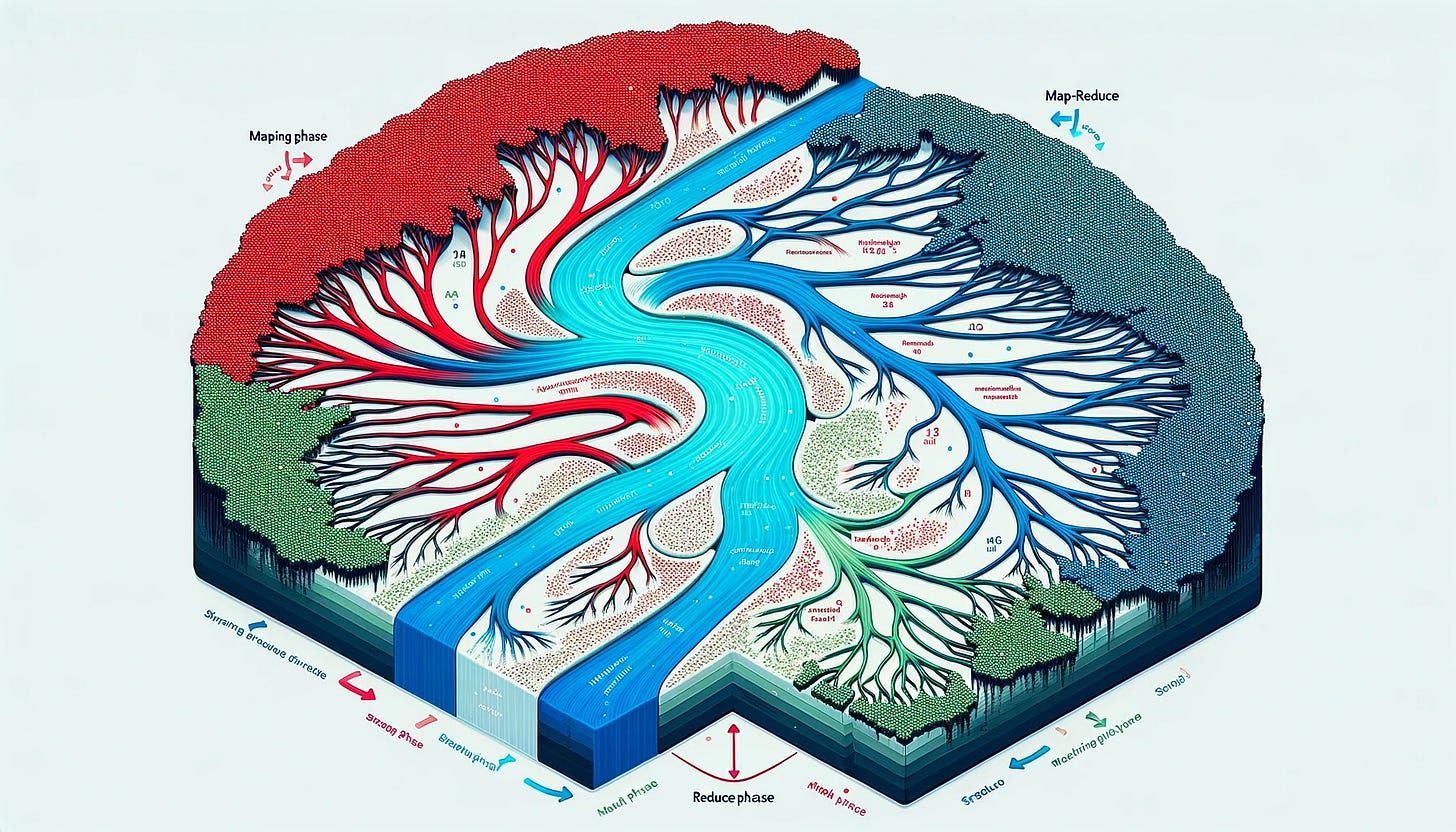
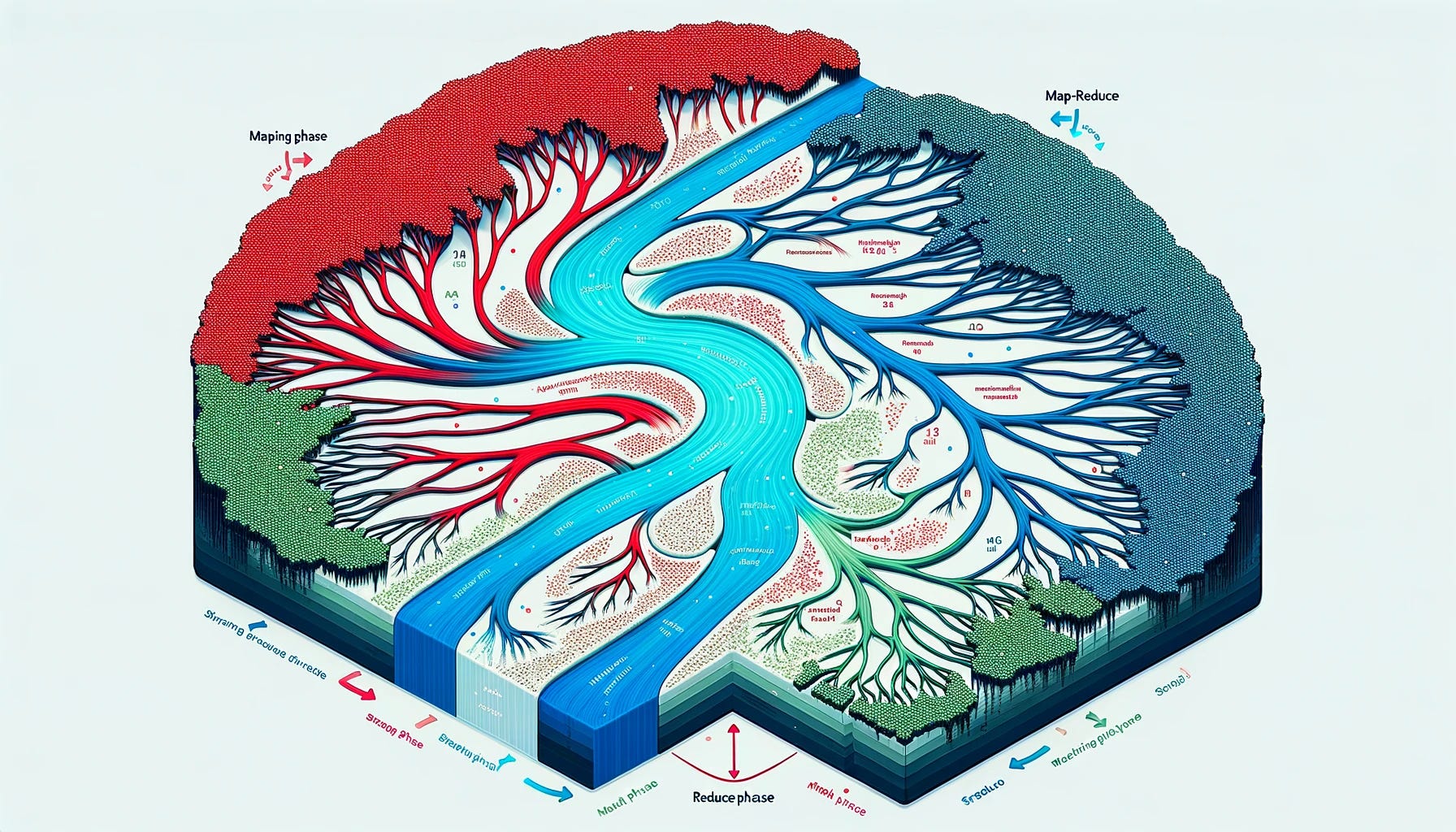
Map-Reduce on Steroids. Because sub-products are asynchronous in nature, project management becomes oriented towards a mapping (creative) phase and a reduction (editorial phase) at increasingly fine levels of resolution. The analogy of a watershed (or lungs) works well here.
Product as Platform. Even when projects are done, they aren’t really done. Having stood up a product, that product takes on a life of its own as others contribute to the platform thus created. The DLC (Downloadable Content) model illustrates this clearly in gaming (just as sequels do in movies), as, along with community content, upgrades continue to push interest in the platform.
Rebooting the Franchise. Every so often, when a platform has reached the extent of its growth, it will be deprecated in favor of a continuity reboot in which the product is taken back to its initial assumptions and rebuilt.
The Bible Keeper. In that regard, what we consider the Scrum Master today is likely to become the Bible Keeper of tomorrow. In a studio setting, the bible keeper maintains the bible - the core assumptions and set of rules that underlies a given narrative and that is critical for continuity. Note that (even as today), much of the actual coordination is managed via an AI, but the Bible Keeper is necessary to sanction specific narratives as canon.
Production Babies and Community Care. Community plays an increasingly important role. That community consists of the consumers of the product, who are often also in a position to be contributors to the evolution of that product. Community care is important - your contributors are often as passionate about your projects as any of your core developers, and often as inventive.
There are other factors that likely will be come more obvious over time, but those are still distant enough to be foggy.
The Rise of the Generative Worker
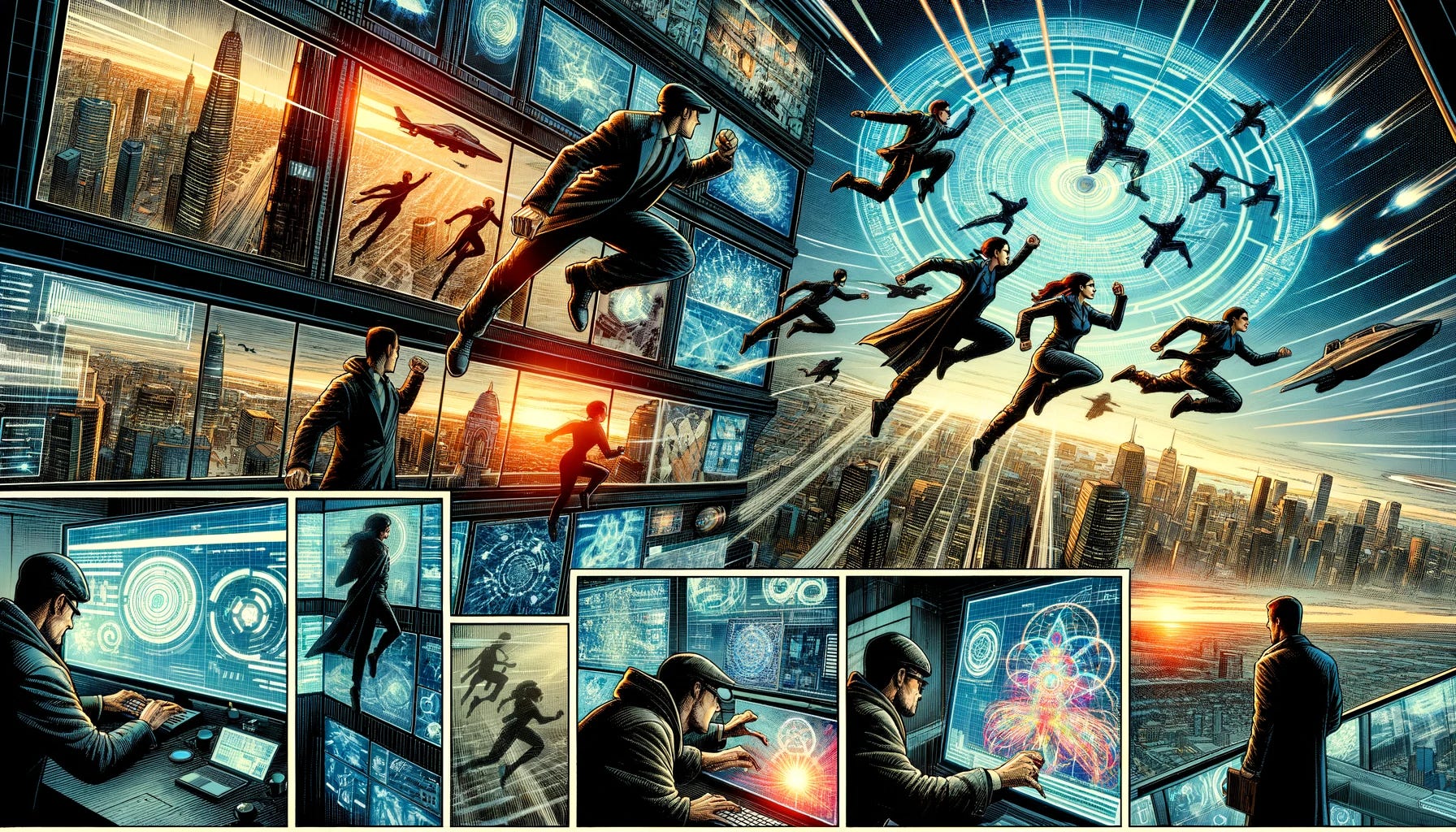
One thing that emerges from this model is that the boundaries between company and community blur far more dramatically than they do in more traditional agile environments. This also points to the shape of the creative/knowledge economy in about twenty years: full time work for a single company will all but disappear.
Instead, we’re heading towards a full contracting economy, one in which the vast majority of people will likely end up working either as independent contractors or as contractors with specific agencies, unions or studios. Agenting APIs will increasingly standardize and formalize interactions between human as well as AI providers, along with compensation, with that compensation then managed via the associated agencies (which may have only one associated agent). That compensation is likely a mix of cash and points, the latter awarded if the project proves highly profitable. The alternative to this is likely subscription, in which people presubscribe to an agent’s output stream.
The wage economy is under pressure from all directions. For non-managerial jobs, companies no longer have loyalty to their employees, they have fear that other companies will gain a competitive advantage if that employee leaves, yet are the first to fire those employees if profits are down. At the same time, managerial jobs frequently pay compensation bonuses in points or options that are frequently taxed more favorably than wage income is, and increasingly, producers are asking why they are not receiving the same thing.
As work becomes more discrete, more asynchronous, and driven increasingly by automation (and as ownership and provenance of IP assets becomes more important legally), a point will come where the cost of hiring the producer on a per project basis is less than the benefits of keeping that person on staff full time (which of course also means that the producer will charge commensurate to their demand in the workforce, which likely will be considerably more than a per hour rate.
One distinction worth noting- agencies themselves will also change. Most agencies that exist today are body shops. They generally exist in a close relationship with the companies that they hire fore, provide minimal benefits to their “contractees”, and usually take a significant percentage of their contractees wages up front. Increasingly, they are being bypassed by professionals, and as a consequence their retention is terrible. They will be replaced by automation within the next five years, as they have become an increasingly insurmountable barrier between skilled workers and potential contracts.
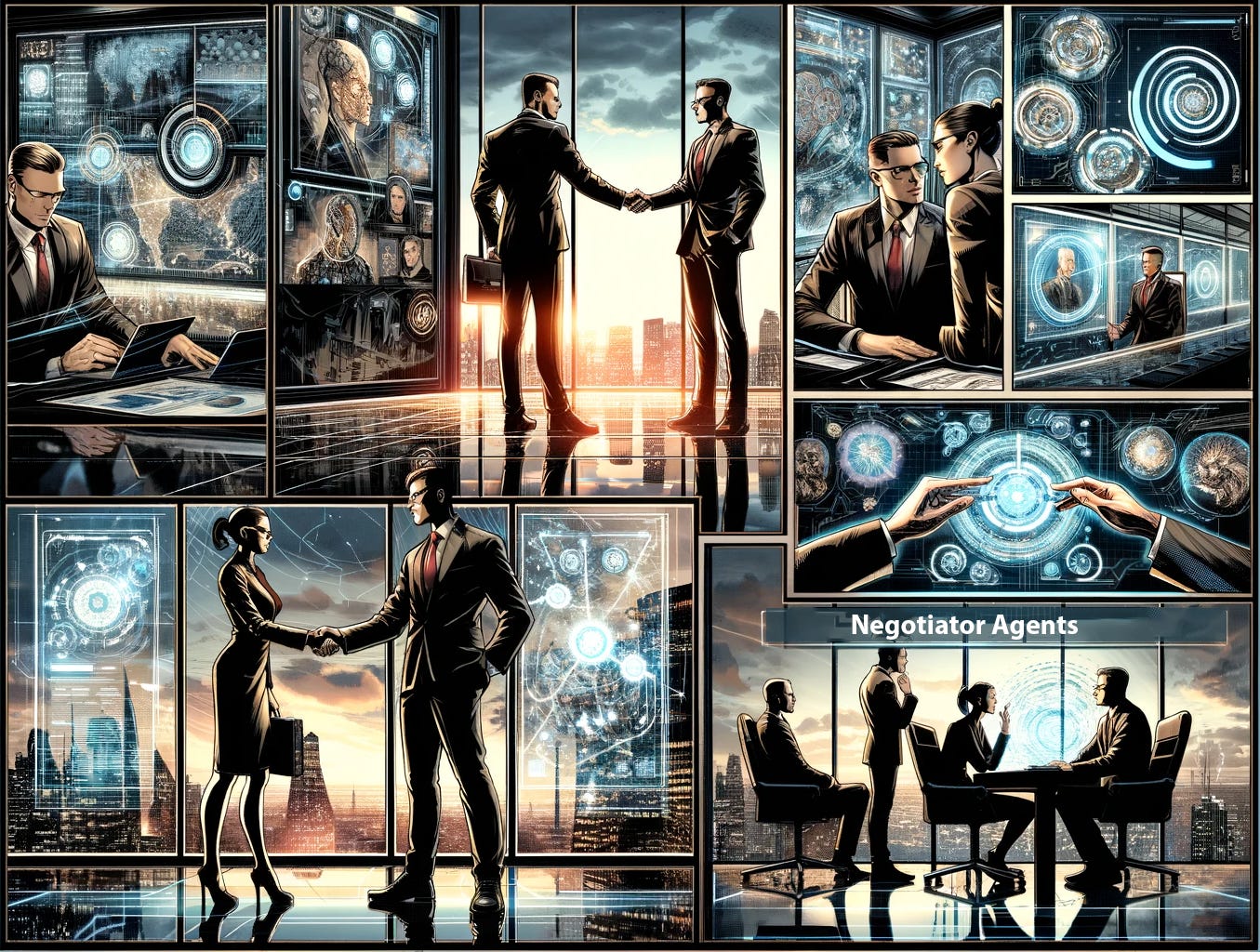
It is my suspicion that the vehicle for this extinction will be agent APIs and the rise of personal agent networks, specifically via some (as yet undeclared) negotation API. Most people tend to be remarkably poor negotiators, undervaluing their expertise when they have it or overvaluing it when they don’t.
Personal negotiator agents on the other hand can assess a number of different factors (depending upon data availability) and aren’t emotionally invested in the negotiation process. The same holds true for AI service APIs. In essence, a person’s value is a complex multivariate function that changes upon market demand and availability, reputation, experience, location, and requirements, and can also shift based upon the ratio of cash per project compared to projected returns on investment of the project in question.
This will prove another incentive factor in the shift towards per project (royalty) as a general payment method. Certain, largely custodial, positions will likely continue as salaried - managing and monitoring data systems, for instance - simply because these are long term responsibilities, but even there, the compensation is likely to become a mix between salaried and ownsership.
From a project management (and enterprise agility standpoint), however, this transition is significant, because it highlights the transiency of involvement in projects by its participants, from the fleeting moments of a customer interaction with a narrative platform to the long term, potentially lifetime involvement of an initial writer or producer.
It’s finally worth noting here the lack of mention about data. This omission is deliberate not because data isn’t important here - it is critical, in fact - but that at this level it has sunk below the threshold of awareness and become infrastructure. Generative AI becomes feasible only when the assumption is made that data is pervasive, distributed, and of varying quality. The prompt specialist (which itself may be another agent AI) becomes a surfer on that data, trying to find the sweet spot that guarantees the longest ride, aware that few data streams are either eternal or comprehensive.
Conclusion
Agile is evolving in the face of generative AI, and will do so even more as agents become ubiquitous. It is evolving because the nature of work (and of human/machine collaboration) is also changing, becoming less linear focused on the assembly line and more on the development (and continuation) of a narrative platform, in which an initial seed may end up creating an enterprise (or a world).
We can draw ideas of what this will look like by examining narrative projects such as movies or television, but these analogies will eventually fall by the wayside as a new methodology emerges by the ones who are in the middle of things. Whatever does emerge is likely to be fascinating.
In media res,
Kurt Cagle
Managing Editor, Generation AI
Mechanical Turk ^ N ... very interesting. I love the Studio metaphor and am gonna give LoRA a deep-dive. Lots to think about! Well-done.